
Wayne Dalton Garage Door Repair in Reading: A Homeowner’s Guide
Wayne Dalton garage door repair in Reading typically costs $180–$420 depending on whether you’re dealing with a broken torque-tube spring, cable failure, or panel damage. The torque-tube system used in most Wayne Dalton doors requires different parts and adjustment techniques than standard torsion spring setups, so hiring a technician with direct Wayne Dalton experience matters more than with most brands. If you’d rather not diagnose this yourself, call us at (833) 324-1505 — we offer free estimates and same-day service across Reading.
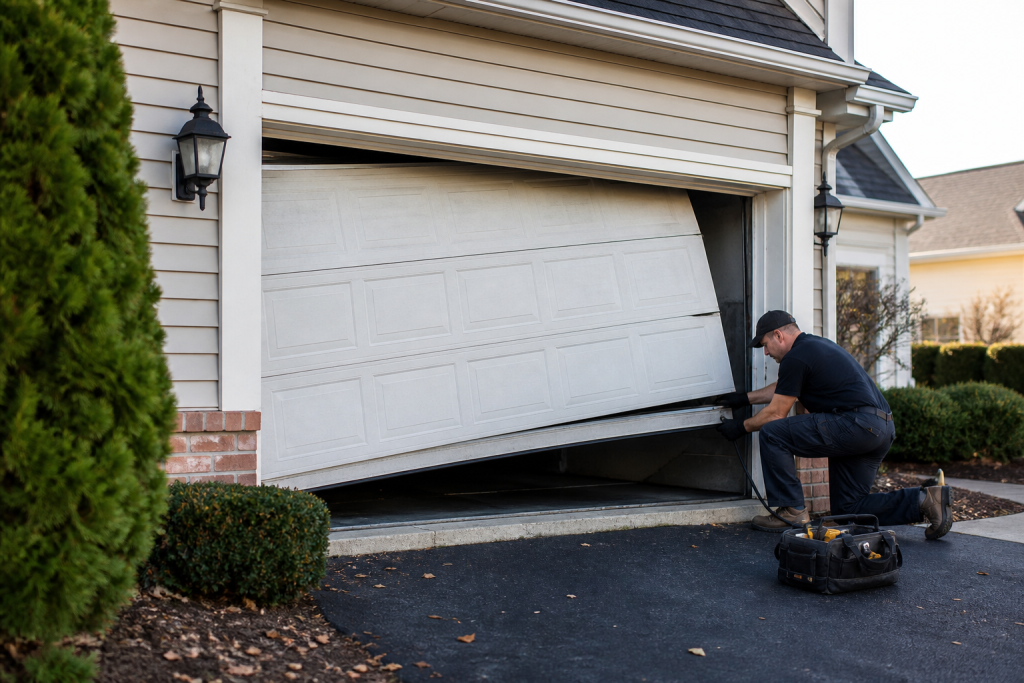
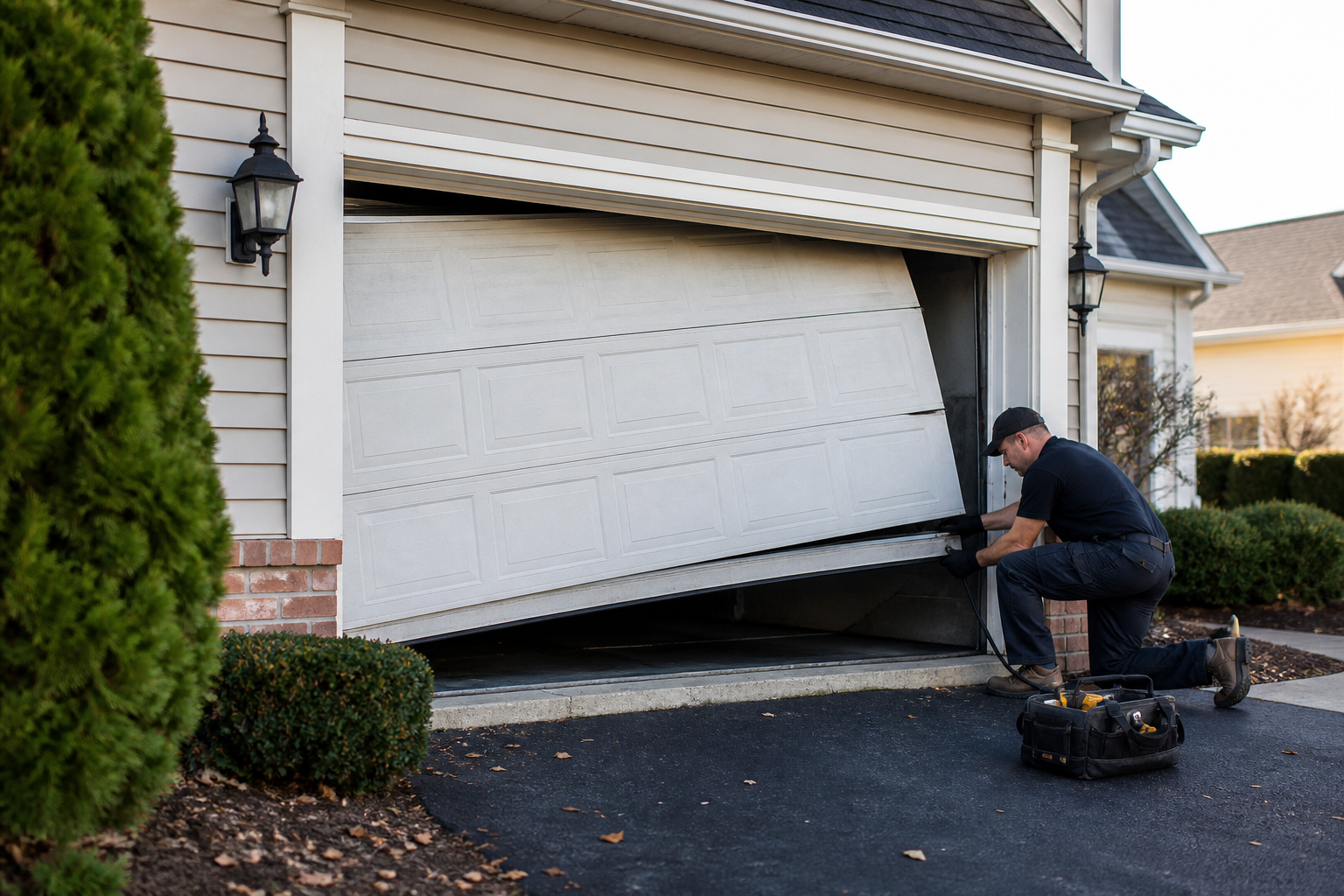
Here’s the mistake we see every week: a homeowner in Reading calls a garage door company after their Wayne Dalton door slams shut or won’t lift, and the tech shows up with standard torsion spring parts. Three months later, the door is noisy, unbalanced, or failed again. The torque-tube spring system that Wayne Dalton engineered — that coiled tube running above your door instead of the exposed spring — was designed to contain spring fragments if failure happens. But that same design means the spring preload, winding cone geometry, and cable drum setup are proprietary. A tech who’s only worked on LiftMaster or Chamberlain opener systems and standard Clopay or Amarr doors simply won’t have the muscle memory for it.
How Wayne Dalton’s Torque-Tube System Actually Works
Most garage doors in Reading use a torsion spring mounted on a steel shaft above the door opening. When the door closes, that spring twists tight and stores energy. When you open it, the spring unwinds and lifts the door. Simple, universal, and every tech learns it first.
Wayne Dalton took a different path with their torque-tube system. Instead of a bare spring on a shaft, the spring is contained inside a hollow tube. The tube itself becomes the torsion member. This matters for three reasons:
- Safety containment: If the spring breaks inside the tube, the fragments don’t fly across your garage — a real concern with high-tension springs.
- Different preload math: The spring rate and initial tension are calculated for the tube’s diameter and wall thickness, not a standard shaft. A tech who guesses here will under-tension or over-tension the door.
- Proprietary hardware: The winding cones, cable drums, and bracketry are Wayne Dalton-specific. We’ve seen techs in Reading try to force standard cones onto a torque-tube and strip the threads entirely.
In our 14 years working across Reading — from the older homes in Centre Park to the newer builds in Flying Hills — we’ve found that Wayne Dalton doors from the 2000s and early 2010s are still running fine when the torque-tube was serviced correctly. The failures almost always trace back to incorrect spring replacement or a previous tech who treated it like a generic door.
Safety note: Garage door springs are under extreme tension. The torque-tube system contains some risk, but improper winding or cone removal can still cause serious injury. We don’t recommend DIY spring work — the tools and knowledge gap is too wide for most homeowners.
Common Wayne Dalton Failures in Reading Homes
Reading’s climate swings matter here. Hot, humid summers and freeze-thaw winters stress metal differently than coastal or dry climates. Here’s what we actually replace on Wayne Dalton doors in this market:
| Component | Typical Cause | Repair Cost Range (2026) |
|---|---|---|
| Torque-tube spring | Metal fatigue, 10,000–15,000 cycle lifespan, rust from garage moisture | $220–$340 |
| Cable failure | Fraying at drum, corrosion, improper previous tension | $140–$200 |
| Bottom bracket / roller | Impact damage, worn rollers causing drag | $120–$180 |
| Panel replacement (steel) | Vehicle impact, denting, rust-through on older units | $280–$420 |
| Weather seal | UV degradation, rodent damage | $80–$140 |
The spring is the big one. A properly matched torque-tube spring should give you 8–12 years of normal use in Reading. We see premature failures when the wrong spring rate was installed — the door feels “heavy” or “too easy” to lift manually, which is your early warning. If your Wayne Dalton door starts struggling around the halfway point or drifts down from the open position, the spring preload is off.
Last month we were in a garage over on Penn Street where a homeowner had two different companies “fix” the same torque-tube in eighteen months. Both used generic springs. The door still groaned and the opener was burning out from overwork. We pulled the tube, matched the original spring specification from Wayne Dalton’s engineering data, and the door has been smooth since. That’s the difference brand-specific knowledge makes.
How to Identify Your Wayne Dalton Model (Without the Paperwork)
Homeowners call us saying “it’s a Wayne Dalton, that’s all I know.” That’s fine — the door tells us plenty if you know where to look. Here’s how to figure out what you’ve got:
- Check the interior face: Most Wayne Dalton doors have a sticker or embossed model number on the inside top section. Look for a series like 8000, 8100, 9100, 9600, or 9700. These denote construction type — steel, insulated steel, or carriage-house style.
- Look at the spring hardware: If there’s a hollow tube above the door with end cones you can’t see into, you’ve got a torque-tube system. If you see an exposed coiled spring on a solid shaft, someone may have converted your door previously — not always well.
- Examine the lock style: Wayne Dalton’s internal slide locks are distinctive. The exterior handle shape and the interior lock mechanism often identify the era even when the sticker is gone.
- Measure the door: Width, height, and thickness. Cross-reference with Wayne Dalton’s published specifications, or just text us a photo — we identify these daily.
Knowing your model series matters for parts availability. Some Wayne Dalton lines from the 1990s and early 2000s used hardware that’s now special-order or discontinued. In those cases, we’ll tell you honestly whether a repair is worth pursuing or if a new garage door installation in Reading makes more financial sense.
Questions to Ask a Reading Repair Tech Before You Hire
Not every garage door company in Reading has deep Wayne Dalton experience. Some are fine for standard repairs but will figure it out on your dime. Here’s how to separate the two:
- “How many Wayne Dalton torque-tube jobs have you done this year?” — A tech who’s done ten or more knows the preload specs and common failure patterns. Someone who pauses or says “they’re all the same” is a red flag.
- “Do you stock torque-tube springs, or do you need to order?” — We keep common Wayne Dalton spring sizes on our truck because we see these doors regularly in Reading. A company that has to order everything means a second trip and more downtime.
- “What’s your process if the model is discontinued?” — An honest tech will explain retrofit options or recommend replacement if parts are truly unavailable. A company that promises they can “make anything work” often creates bigger problems.
- “Will you show me the door balance after the repair?” — A properly balanced Wayne Dalton door should stay put at any position when disconnected from the opener. If a tech won’t demonstrate this, they may not be confident in their work.
At Matrix Garage Door Repair Reading, Joseph Taylor personally handles the Wayne Dalton calls. When the owner shows up, the job gets done right — and you get someone who can explain what failed and why, not just swap parts and leave.
Repair vs. Replace: When a Wayne Dalton Door Has Reached Its Limit
We’re not in the business of selling new doors to people who don’t need them. But there are honest breakpoints where repair becomes throwing good money after bad:
| Situation | Our Recommendation |
|---|---|
| Door under 12 years, single component failure, model still supported | Repair — typically $180–$340 |
| Multiple component failures, door over 15 years, some parts discontinued | Evaluate replacement cost vs. cumulative repair bills |
| Structural rust on steel panels, especially bottom section | Replacement — rust spreads, and panel-only replacement often mismatches |
| Opener struggling due to door weight increase from failed components | Fix door first; if opener is old, bundle with garage door opener service in Reading |
Here’s our rule: if the repair estimate exceeds 40% of a new door’s installed cost and the door is past 15 years, we’ll show you both options. No pressure either way. Nearly 800 homeowners have trusted us across 14 years because we give straight answers, not sales pitches.
Related services in Reading: If your Wayne Dalton door needs more than a spring — maybe the opener is failing too, or you’re considering a full upgrade — see our Garage Door Repair in Reading page for our complete repair capabilities.
The Bottom Line
Wayne Dalton doors are built differently, and that difference is an advantage when the repair is done by someone who knows the system. In Reading, we’ve seen torque-tube springs last 15 years when properly specified and installed — and fail in 18 months when they’re not. The cost difference between a skilled Wayne Dalton repair and a botched one isn’t just the initial invoice; it’s the callbacks, the opener strain, and the safety risk of an unbalanced door.
Key takeaways:
- Wayne Dalton’s torque-tube system requires specific parts and preload knowledge — not all Reading garage door companies have this.
- Typical repairs run $180–$420; springs and cables are the most common failures in our climate.
- Identify your model from interior stickers or hardware details — it affects parts availability and repair feasibility.
- Ask direct questions about Wayne Dalton experience before hiring any technician.
- Repair makes sense for younger doors with isolated failures; replacement becomes smarter when multiple systems are failing on an older unit.
If you’re in Reading and your Wayne Dalton door isn’t running right, Matrix Garage Door Repair Reading offers free estimates — call (833) 324-1505. Joseph Taylor will walk you through what’s actually wrong and whether repair or replacement fits your situation.
Frequently Asked Questions
Most Wayne Dalton repairs in Reading fall between $180 and $420. A torque-tube spring replacement typically runs $220–$340, while cable or roller work is usually $120–$200. Panel replacement on steel models ranges higher at $280–$420. Call (833) 324-1505 for an exact quote — estimates are free.
Technically yes, but practically no. The torque-tube spring system requires proprietary parts and specific preload calculations that differ from standard torsion springs. We’ve fixed plenty of Reading doors that other companies “repaired” incorrectly. Ask specifically about torque-tube experience before hiring.
Signs include a door that feels very heavy to lift manually, a loud bang from the garage (the spring snapping inside the tube), a door that won’t stay open, or an opener that strains or reverses. With torque-tube systems, you can’t always see the broken spring — but you’ll feel the symptoms. Don’t attempt to force the door; call a trained technician.
If the door is under 15 years and the failure is isolated to one component, repair is usually cost-effective. Once multiple systems fail or parts become discontinued, replacement often saves money long-term. We evaluate this honestly on every call — no upsell pressure. Call (833) 324-1505 and we’ll give you both numbers.
Written by Joseph Taylor, Owner & Lead Technician at Matrix Garage Door Repair Reading, serving Reading since 2012.
Need Garage Door Help?
Call Matrix Garage Door Repair Reading — licensed & insured, here with fast after-hours help in Reading.
(833) 324-1505